



Which Elevator Is Best For A Home?
Oct 31, 2026
Leave a message
Thinking about installing a home elevator but feeling overwhelmed by terms like "traction," "positive drive," "screw-driven," "backpack-style," or "gantry-frame"? Don't panic! Today, we'll use a "personality-based" approach to help you understand the differences, pros, and cons of each type in just one minute!
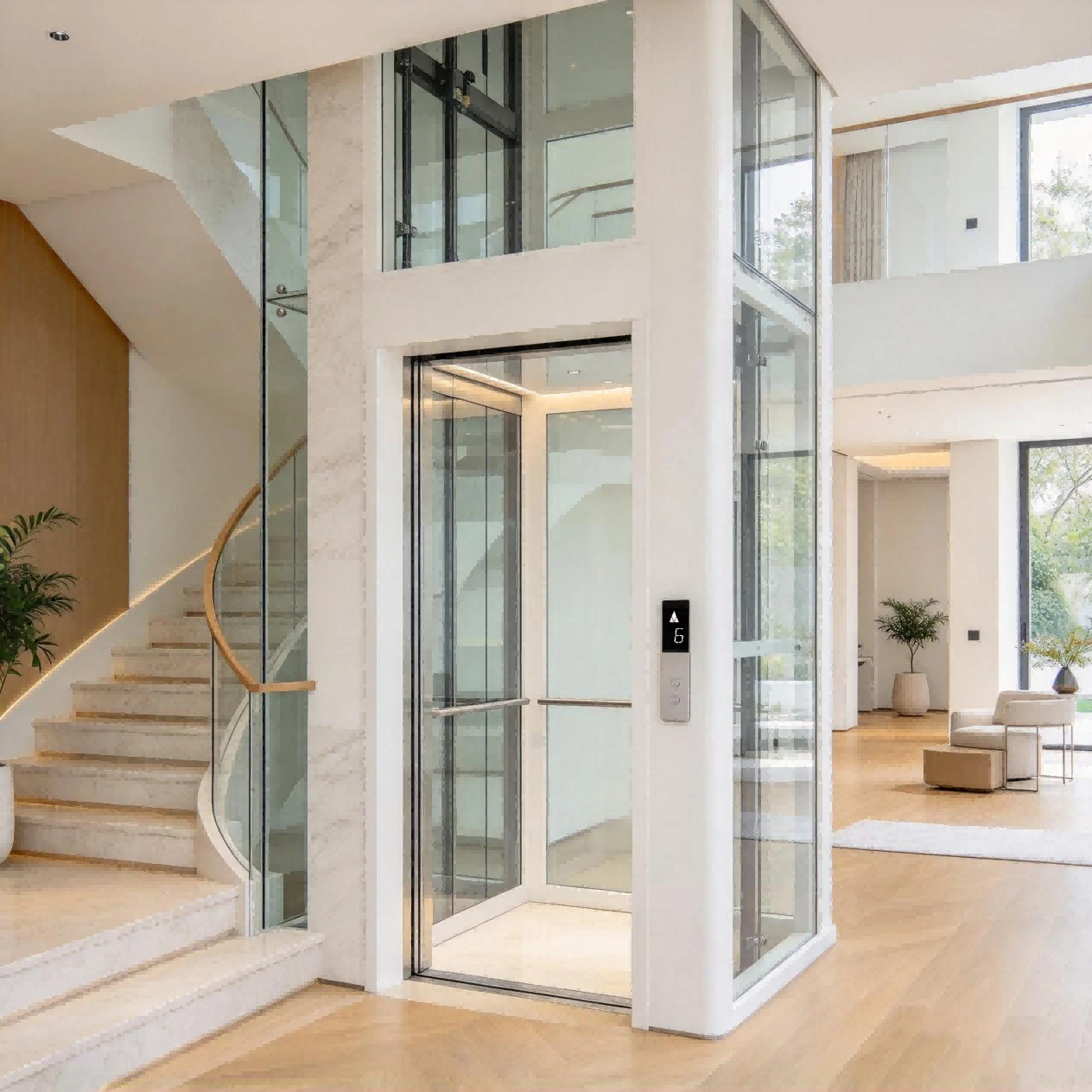
1️⃣ Traction Gantry-Frame Elevator: The "Reliable Straight-A Student"
🔹 Features: Supported by guide rails on both sides-stable like a "gantry frame." It runs smoothly and quietly, making it ideal for frequent, long-term use.
🔹 Pros: Mature technology, high safety, high load capacity (great for moving furniture), and affordable maintenance (standardized parts).
🔹 Cons: Lower shaft space efficiency (requires extra room for a counterweight); stricter requirements for the pit depth (typically 15–30 cm) and overhead clearance (at least 2.5 meters).
Best for: Villas and large-floor-plan homes where stability and cost-effectiveness are the top priorities.
2️⃣ Traction Backpack-Style Elevator: The "Flexible All-Rounder"
🔹 Features: Guide rails are positioned on one side of the car-like a "backpack"-which saves space. It supports entry/exit from three sides (adjacent, through-car, or three-sided access).
🔹 Pros: High shaft space efficiency (allows for a larger car within the same footprint), flexible installation (ideal for retrofitting), and an attractive, minimalist design.
🔹 Cons: One-sided loading can lead to noise; guide shoes may wear out faster (resulting in higher long-term maintenance costs); moderate load capacity (not suitable for heavy items).
Best for: Duplexes or lofts with limited shaft space, where flexible door configurations and aesthetics are key.
3️⃣ Screw-Driven Elevator: The "Safety Guardian"
🔹 Features: Uses a screw-and-nut drive mechanism-moving upward slowly, much like a "screw turning into a nut." It is famously marketed as "impossible to fall."
🔹 Pros: Low civil engineering requirements (5cm pit depth, 2m overhead clearance), high space efficiency (fits in a small 900×900mm shaft), and exceptional safety (screw-locking mechanism prevents falls).
🔹 Cons: Slow operating speed (0.15–0.25 m/s), mechanical noise (the motor moves along with the platform), limited travel height (typically ≤15m), and high cost (due to many imported components).
Best for: Small homes, duplexes, or households with high safety requirements (e.g., those with elderly residents or children).
4️⃣ Direct-Drive (Winding Drum) Elevators: The "Heavy Lifters"
🔹 Features: The motor pulls the car directly (similar to a winch); there is no counterweight, resulting in a simple structure.
🔹 Pros: High shaft space efficiency (no space needed for a counterweight) and easy installation (ideal for retrofitting older buildings).
🔹 Cons: Lower safety margin (requires regular inspection of steel cables), high power consumption (3–4 times that of traction elevators), and limited travel height (restricted by the length of the cable that can be wound).
Best for: Households with limited budgets, low speed requirements, and a need for limited vertical travel (typically ≤4 floors).
5️⃣ Hydraulic Elevators: The "Old-School Gentlemen"
🔹 Features: The car is propelled by hydraulic fluid; they offer smooth operation but are gradually being phased out.
🔹 Pros: Smooth operation, low noise, and flexible installation (less stringent shaft requirements).
🔹 Cons: High energy consumption (significant energy loss in the hydraulic system), high maintenance costs (oil seals are prone to leaks), potential for unpleasant odors (from the hydraulic fluid), and limited travel height (typically ≤6 floors).
Best for: Retrofitting older villas; however, due to their significant drawbacks, they are rarely chosen for new installations.
Summary: Choose a traction-driven gantry-style lift for stability and great value; opt for a traction-driven "backpack" (cantilever) style if you have a small shaft or need flexible door placement; prioritize a screw-driven lift for safety in smaller homes; consider a drum-driven (positive-drive) lift if you're on a budget and living in a low-rise building. Hydraulic lifts are becoming obsolete-think twice before choosing one! Which type is right for your home? Share your requirements, and I'll help you avoid common pitfalls!
Send Inquiry